
Quick answer: if you have an iPhone 12 or later, the best free path is usually Voice Memos itself. Download another app only if you want a different output shape, such as a transcript that lives inside Notes or a structured Markdown note.
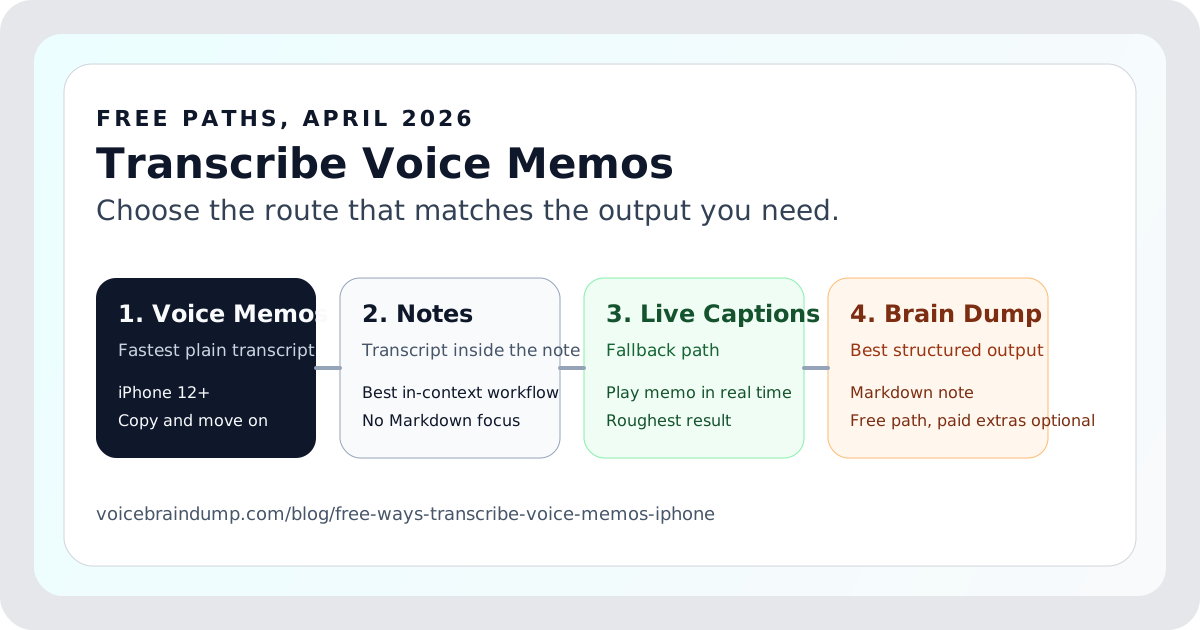
Figure: In 2026, "free transcription" is mostly a routing problem: plain transcript, note-native transcript, fallback captions, or structured export.
The free options that actually matter
| Method | Best for | Cost | Offline-capable | Main limitation |
|---|---|---|---|---|
| Voice Memos | Quick plain transcript | Free, built in | Yes | Flat text only |
| Notes | Transcript that belongs inside a note | Free, built in | Yes | Limited export discipline |
| Live Captions | Emergency fallback | Free, built in | Partial, depends on support | You have to play the memo in real time |
| Brain Dump | Structured note output from a memo | Free download, paid upgrades optional | Yes | Requires installing an app |
Voice Memos is now the default free method
This is the first method to try because it removes almost all setup friction.
How to use it:
- Open Voice Memos
- Tap the recording
- Choose View Transcript or copy the transcript directly
Use this when:
- you just need the words
- you are sending the text onward immediately
- you do not need Markdown, headings, or a reusable document structure
Do not overcomplicate this use case. Apple owns it now.
Notes is the best free option when the transcript should stay attached to a note
Notes solves a different problem than Voice Memos. It is not just transcription; it is transcription in context.
Use Notes when:
- you are already outlining in Notes
- you want the transcript beside other text
- you want less app-switching
How to use it:
- Open Notes
- Tap the attachment button
- Choose Record Audio
- Record and review the transcript inside the note
If you know you are going to end up in Notes anyway, this is a cleaner free workflow than recording in Voice Memos first and moving things around later.
Live Captions is the fallback, not the best workflow
Live Captions works when you need a transcript-like output and either:
- your device path is limited
- you are trying to salvage text from playback
- you do not care about elegance
How to use it:
- Turn on Settings → Accessibility → Live Captions
- Play the memo
- Copy what you need from the caption bubble
It is useful in a pinch, but it is slower and rougher because you have to listen through the memo in real time.
Brain Dump is the free option worth using when you want a real note, not just text
If your end state is:
- a journal entry
- a cleaned-up meeting note
- a Markdown note for Obsidian
- something you will paste into another workflow
then Brain Dump is the better free path than Apple's plain transcript.
Why it is different:
- it is built around structured output
- it is useful for voice journaling and thinking work
- it fits better when the transcript is supposed to become a document
Fast path:
- Open the memo
- Tap Share
- Choose Brain Dump
- Export or keep the Markdown note
Related:
- /blog/convert-iphone-voice-memos-to-text
- /blog/iphone-offline-dictation-airplane-mode
- /learn/voice-memo-to-text-shortcut
A simple rule you can actually remember
- Need raw text fast: use Voice Memos
- Need transcript inside a note: use Notes
- Need a fallback with no install logic: use Live Captions
- Need a note-shaped result: use Brain Dump
Tips that improve every free method
- Keep the mic reasonably close to your mouth
- Add short pauses between ideas
- Speak punctuation when structure matters
- Trim dead air before exporting or sharing
- Add names and jargon to a custom dictionary if they recur: /learn/custom-dictionary-jargon