Picture this. Your favorite notes app sends a nice email and a sad deadline. The export is a file no one else understands. Your history starts to feel fragile. Plain text never has this problem.
A library that never closes
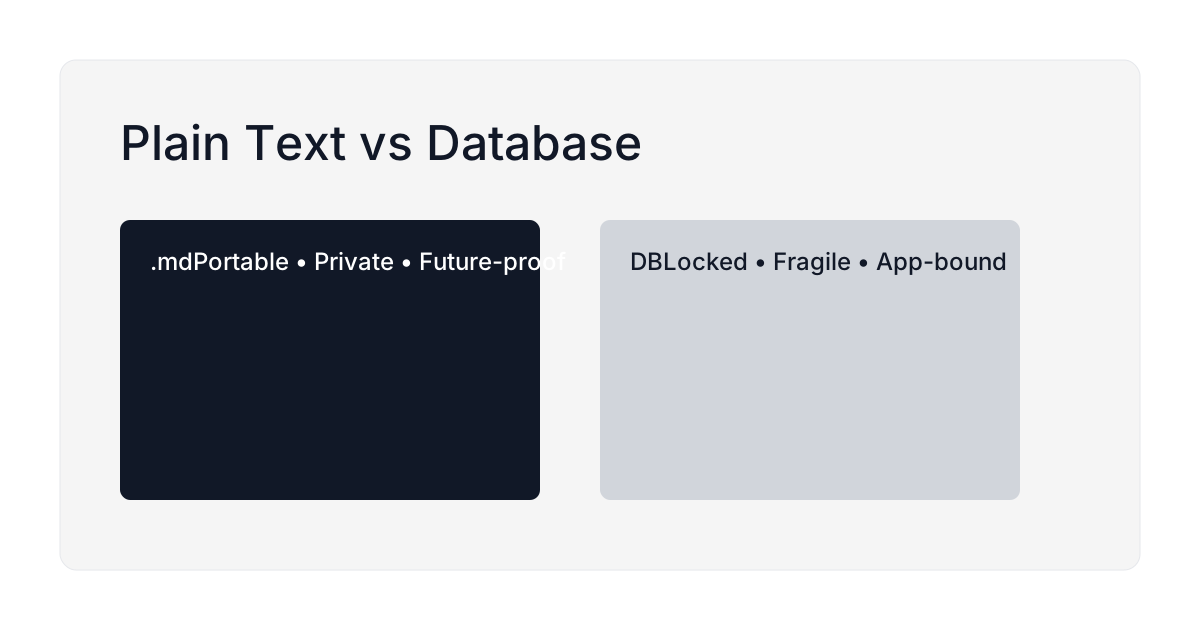
A database-backed notes app owns your notes. The rows are its rows, the schema is its schema, and the only way out is whatever export button it chose to build. When that app shuts down, changes its pricing, or simply stops being the app you want, the export is a bundle of JSON and a weekend of work.
Plain text has no exit, because there was never an entrance. A note is a file. A folder is a project. Every editor already reads it.
Why plain text wins for the long run
- Portability. Open notes in any editor. If you like graphs, use Obsidian. If you like search, use your terminal. If you like quiet, use any text editor.
- Longevity. Formats come and go. Plain text is older than your laptop and will outlast it. Ten years from now the file will still open.
- Location. The files are in your own iCloud Drive, not in our database. There is no account of ours holding your notes, and nothing to request them back from.
Markdown gives you structure while keeping the source readable. You get headers and lists without locking your work in a cage.
A simple way to prove it to yourself
Make a folder on your desktop. Create three small notes in plain text. Open them in three different editors. Then move that folder onto a USB drive and plug it into a different machine. Your notes will not care. That is the point.
But I like features
You can have them. Brain Dump writes into a vault you already own. Point it at an Obsidian vault and it reads that vault's own configuration: the attachment folder from .obsidian/app.json, the template folder from .obsidian/templates.json, the property types from .obsidian/types.json. When it writes one of those keys back it splices that single value and leaves everything Obsidian and its plugins wrote byte for byte intact. Headings, lists, wikilinks, callouts and tasks are all in the file, in Obsidian's own syntax.
If you want version history, add Git. A private repo gives you diffs, branches, and time travel. See the quick guide: Back up with Git.
Migration when you switch tools
Switching is simple because the notes are files. Point your new tool at the same folder. Or copy the folder somewhere else. No exports to untangle. No tables to fix. No surprise field names.
Brain Dump adds exactly one thing to a vault: a hidden .braindump/ directory holding its own working state. Delete the app and delete that folder, and what remains is the Markdown you wrote and the Obsidian configuration you already had. Its durability machinery, the write-ahead log and the operation ledger, lives in Application Support and never enters the vault at all.
A plain privacy promise
Transcription runs on device by default. Optional polish is off until you turn it on. If you do, only the content you choose will be sent for polish. Full details: How we handle privacy.
If you want a test drive, write your next three entries in Brain Dump. Then open the folder in Files or Obsidian and see how it feels to hold your work.